
Meta Ads for Adelaide Restaurants: The Campaign Setup That Works
The exact campaign structure, audience approach, and creative format we use for hospitality clients across Adelaide.
Most restaurant Meta Ads campaigns fail before the campaign even launches. The objective is wrong. The audience is too broad or too narrow. There is no retargeting. And the creative looks like every other sponsored post in the feed. Getting these four things right is the difference between a campaign that books tables and one that burns through budget with nothing to show for it.
We have run Meta Ads for hospitality clients across Adelaide including Greek Street Unley and An Nam Quan. The setup we use now is the result of what has worked, what has not, and what the platform actually rewards for local hospitality.
Why Most Restaurant Campaigns Fail
The most common mistake is choosing the wrong objective. A lot of restaurant owners or agencies set up Meta campaigns with a Conversions objective, which makes sense in theory: you want people to book, so you optimise for bookings. The problem is that Conversions optimisation requires at least 50 conversion events per week per ad set to work properly.
Most local restaurants do not generate 50 online booking events per week. Certainly not from a new campaign. So the campaign never exits the learning phase, costs spike, results are inconsistent, and the whole thing looks like it is not working when actually the setup was wrong from day one.
For most Adelaide hospitality clients, the right objective is Traffic optimised for Landing Page Views, or Video Views if the creative is Reel-first. These objectives give the algorithm enough signal to optimise without needing volume that most local venues simply cannot generate.
The second common mistake is targeting by interest. Interests like "food lovers" or "restaurants" sound logical but they are enormous, they have low commercial intent, and they include people across the country or even globally depending on how the account is set up. Local radius plus behavioural audiences consistently outperforms interest stacking.
The Campaign Structure We Use
For a local restaurant, a three-campaign structure works well. One campaign for cold audiences (people who have not interacted with the business before), one for warm audiences (people who have visited the site, engaged on Instagram or Facebook, or watched a Reel), and one for retargeting (people who clicked through but did not complete a booking enquiry).
Within each campaign, keep ad sets simple. One to two ad sets per campaign maximum when you are starting out. The more you split, the less signal each ad set accumulates, and the slower learning becomes.
Cold campaign audiences worth testing: 5km radius around the venue, 10km radius for dinner occasions, 1% lookalike from your email list or booking data if you have 1,000 or more contacts to seed from.
Do not layer too many exclusions early. Let the algorithm find its own efficiency first. Once you have data, then start excluding people who have already converted.
Audience Layers That Work for Local Hospitality
For warm audiences, the three highest-value layers are website visitors from the last 180 days, Facebook and Instagram page engagers from the last 90 days, and Reel viewers from the last 30 days who watched at least 50 percent of the video.
These audiences are small for a local business. Do not panic about that. A warm audience of 800 to 2,000 people for an Adelaide restaurant is completely normal and worth targeting because these people already know the venue exists.
Email list lookalikes work well as a cold audience source once you have 1,000 or more hashed email addresses to upload. A 1% lookalike from that list in metro Adelaide will find people with similar online behaviour to your existing customers. This consistently outperforms interest-based audiences for established venues with real customer data.
For An Nam Quan, stacking website visitors, Instagram engagers, and Reel viewers into a single warm audience gave us a reliable retargeting pool. The cost per booking enquiry from that warm layer was consistently lower than cold audiences because these people had already shown intent.
Creative Format: Reels Dominate
For hospitality, Reels outperform static images. Full stop. The cost per result difference is not marginal. Across the hospitality campaigns we have run, Reels consistently deliver lower CPMs and higher click-through rates than static creative in the same campaigns.
The format that works: 15 to 30 seconds, food-first opening within the first 2 seconds, no slow intros, ambient sound or natural kitchen audio rather than music-only tracks, and minimal text overlay. The algorithm rewards content that people actually watch rather than scroll past.
Hook structure matters more than production value. A phone-shot close-up of a plate being set down will outperform a polished studio shot that opens with a logo. The feed is full of polished content. Authenticity cuts through.
Keep the caption tight. A hook, a payoff, and a clear call to action. Keep it under 125 characters before truncation on mobile. "Sydney-style dumplings, Unley Road. Book now for the weekend." That is enough. Do not write an essay in the caption when the Reel is doing the work.
Pixel Events for Restaurants
If you are not firing pixel events from your restaurant website, you are flying blind. The minimum setup is three events: FindLocation (click to Google Maps or Apple Maps), Contact (phone number click or contact form submission), and InitiateCheckout (booking form open, whether via your own form or an embedded reservation widget).
These events tell the algorithm what a high-intent user looks like. They give you audiences to retarget. They give your campaign signal to optimise against even when you cannot optimise for a purchase event.
For An Nam Quan, we implemented all three using custom JavaScript with a 400ms fireAndGo delay on external link clicks to ensure the pixel event fired before the browser navigated away. FindLocation in particular is a strong intent signal for a restaurant. Someone clicking through to Maps is close to visiting.
Without events, you cannot build retargeting audiences from your site. You cannot see which creative drove the most high-intent behaviour. You cannot optimise for anything beyond clicks.
Budget Starting Points
For a local restaurant just starting on Meta Ads, a minimum of $30 to $50 per day gives you enough data to make decisions within two to three weeks. Below that, learning is too slow and the data is too noisy to be actionable.
Split your budget roughly 60 percent toward cold audiences and 40 percent toward warm and retargeting when you are starting out. As the warm audience builds and retargeting costs drop, shift more budget to cold acquisition.
Do not expect a direct ROAS number for a restaurant. Most bookings happen through a phone call, a walk-in after seeing the ad, or a reservation platform that is not connected to your pixel. The meaningful metric is cost per booking enquiry: how much did it cost to generate a Contact or InitiateCheckout event? For Adelaide hospitality, a cost per Contact event under $8 to $12 is solid. Under $5 is strong.
Greek Street Unley: The Results That Come From Getting It Right
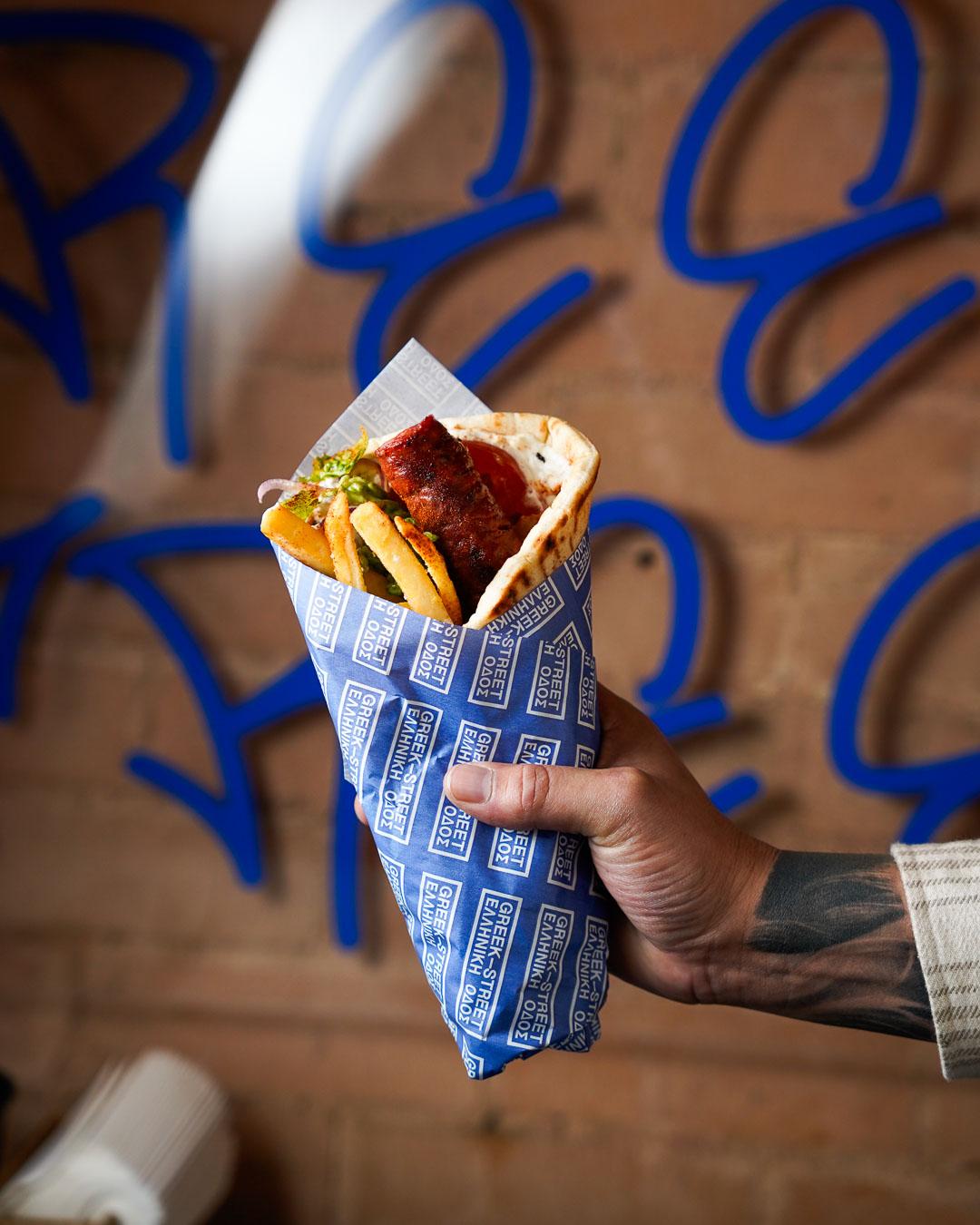
Greek Street Unley came to us wanting to grow weekly revenue through Meta Ads and social media management. The campaign structure was built on the framework above: Traffic objective, Reel-first creative, layered warm audiences, and proper pixel event tracking for FindLocation and Contact events.
The result was 58 percent weekly revenue growth. That number came from a combination of consistent organic content and paid amplification of the best-performing posts. The paid strategy put their food in front of local audiences who had not seen the brand before. The organic strategy gave those audiences something worth following.
The creative did not look like an ad. That was deliberate. The best-performing content across their campaigns looked like the kind of content a local food account would post. It caught attention because it was not trying too hard.
What Success Actually Looks Like
For a local restaurant on Meta Ads, success is not a ROAS number. It is tables filled, phones ringing, and reservation platforms recording consistent bookings during the campaign period.
Define your cost per booking enquiry before you start. Decide what a booking is worth to your venue on average. If a table of four spends $180, and you book three tables per week from Meta Ads at a cost of $15 per enquiry, the maths works. Track it consistently. Adjust creative before touching budget. If results drop, the creative has usually fatigued before the strategy has failed.
Meta Ads for Adelaide restaurants work when the setup is right. The platform rewards signal, consistency, and creative quality. Get those right and the results follow. See our Meta Ads service for how we structure campaigns, or get in touch to talk through your setup.