
How the Restaurant Accelerator Program Works (And Who It Is For)
Most marketing arrangements ask the restaurant to pay upfront and hope for results. The Accelerator inverts that. We fund the ad campaigns entirely, earn nothing unless the restaurant earns more, and take 33% only of the revenue we generate above what the restaurant was already making before we arrived.
This is not a discounted retainer or a performance bonus on top of a base fee. It is a different model entirely. Here is how it works, who it suits, and what the qualification criteria actually mean.
The Revenue Share Structure
The Accelerator runs on a simple split: the restaurant keeps 67% of all above-baseline revenue, we take 33%.
The baseline is what the restaurant earns in a normal week without our involvement. We establish this over four weeks using the restaurant's POS data before we spend a single dollar on advertising. The baseline is not the restaurant's best week or worst week. It is the realistic average of what they were doing across the preceding 8 to 12 weeks before we started.
Once the baseline is set, everything above it is attributed to our campaigns. The restaurant keeps two thirds of that increment. We take one third. If weekly revenue stays flat, we earn nothing. Not a reduced fee. Nothing. The ad spend we funded is absorbed by us.
This structure changes the incentive completely. A retainer agency can invoice you regardless of results. We cannot. Every week the campaigns underperform, we absorb the cost of that underperformance.
Why We Fund the Campaigns
Funding the ad spend is not philanthropic. It is what makes the accountability credible.
An agency that charges a fee for campaign management has a guaranteed income regardless of results. They can point to reach, impressions, clicks, and engagement as evidence of activity even when bookings do not move. The financial relationship is decoupled from the outcome.
When we fund the campaigns, our cost is tied directly to whether the investment produces a return. We pay for the ads. We earn nothing unless the revenue comes. That is a meaningful alignment, and it is the part of the model that most traditional agencies would never accept because it requires confidence in the actual work.
The restaurants we work with do not pay for ad spend. Their cost is time: the onboarding process, data sharing, content collaboration, and the ongoing communication that keeps campaigns running well.
The Qualification Criteria
We are selective because we are putting our own capital into each engagement. A restaurant that is the wrong fit for this model loses us money and wastes their time. The qualification criteria exist to filter for situations where the model can genuinely work.
At least six months of trading. We need a baseline to work from. A restaurant that opened three months ago has too little revenue history to establish a meaningful baseline. We also need to see that the operation can sustain the increased demand that comes with a successful campaign.
Consistent weekly revenue. The baseline methodology requires stable enough revenue to distinguish campaign effects from normal variation. A restaurant with highly seasonal or irregular revenue, or one that has just moved premises, creates attribution problems we cannot reliably solve.
Owner engagement. The Accelerator is not a passive arrangement where we handle everything and the owner receives a cheque. We need content approvals turned around promptly. We need access to POS data on a weekly basis. We need the owner to be a willing partner in the process, not a spectator.
Adelaide metro. Geographic concentration is part of how we maintain quality. We know the Adelaide market well. We know which suburbs have strong dining populations, which platforms perform for which neighbourhoods, and what creative resonates locally. Spreading across cities would dilute that knowledge.
Operational fundamentals in order. No amount of advertising fixes a restaurant with a broken kitchen, a team that does not show up, or food that disappoints. We do a brief operational assessment before accepting any restaurant into the program. If the underlying operation has problems, we say so and we do not proceed.
The Four-Week Onboarding
The first four weeks are baseline establishment and setup, not results delivery. Anyone who expects to see campaign results in week one has misunderstood the model.
Weeks one and two: baseline establishment. We access POS data, review the last three months of weekly revenue, and establish the baseline figure. We also audit the restaurant's existing digital presence: website, Google Business Profile, Meta Business Portfolio, pixel setup, and booking system.
Week two to three: technical setup. Pixel events, CAPI if applicable, GA4 configuration, Meta Business Portfolio structure, and Google Business Profile optimisation. This is the infrastructure work that makes the campaigns measurable.
Week three to four: creative and campaign build. We brief a photographer or videographer for the first content shoot. We build the campaign architecture: cold audience, warm retargeting, and booking event retargeting layers. We write ad copy variations and prepare the first Reels for review.
End of week four: first campaign launch. The first ads go live. We watch closely for the first two weeks and adjust based on early signal.
The Platform We Built
Every Accelerator restaurant has access to the Accelerator Platform: a dashboard that shows weekly revenue against baseline, ad spend, platform metrics, and the running revenue split calculation. More detail on how we measure revenue from campaigns is covered in tracking restaurant revenue from digital ads. The platform is updated weekly using POS data the restaurant provides.
This transparency is non-negotiable. The restaurant can see exactly what they earned above baseline, exactly how much ad spend went into generating it, and exactly what the split calculation produces. There are no hidden numbers.
The platform also flags when a campaign is underperforming against the expected trajectory, which lets us have honest conversations early rather than delivering a bad report at the end of the month.
The Results We Have Seen
Two case studies are the clearest evidence of what the model produces when it works.
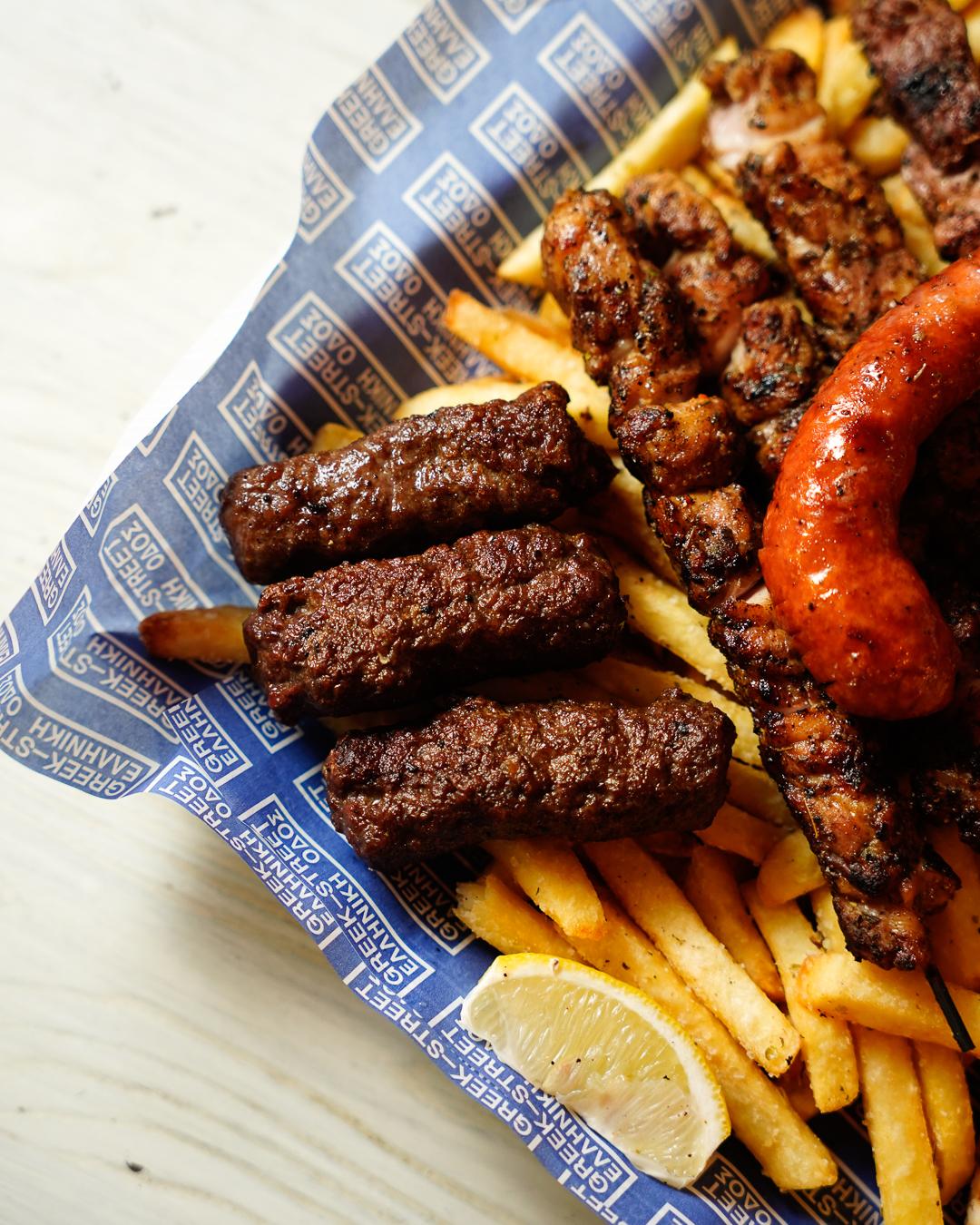
Greek Street Unley delivered 58% above-baseline revenue growth in their first campaign season. The campaign ran on Meta Ads with Traffic/LPV objective, Reel-first creative, and a structured audience architecture across cold, warm, and retargeting layers.
An Nam Quan ran a full digital stack including Meta Ads, Google Ads, and social media management. Media Efficiency Ratio reached 27.95, with Google Ads producing a $0.12 cost per click on local search terms. The campaign generated consistent above-baseline revenue across the engagement period.
These results came from restaurants that met the qualification criteria and where the owners were active participants in the process. The model does not produce results automatically. It produces results when the inputs are right.
The Application Process
Applications go through adelaidesocials.com.au/accelerator. We ask for basic information about the restaurant, trading history, and what the owner is hoping to achieve. We review every application and respond within three business days.
If the initial application looks like a good fit, we book a 30-minute call to go deeper on the restaurant's situation, the data we would need to access, and whether the model makes sense for both parties. There is no hard sell. If it is not the right fit, we say so.
If it is a fit, the onboarding begins. Four weeks of setup, then campaigns live. The model is straightforward. The results are contingent on doing the work well. That is the arrangement. Learn more about how we work with hospitality businesses or get in touch to start a conversation.